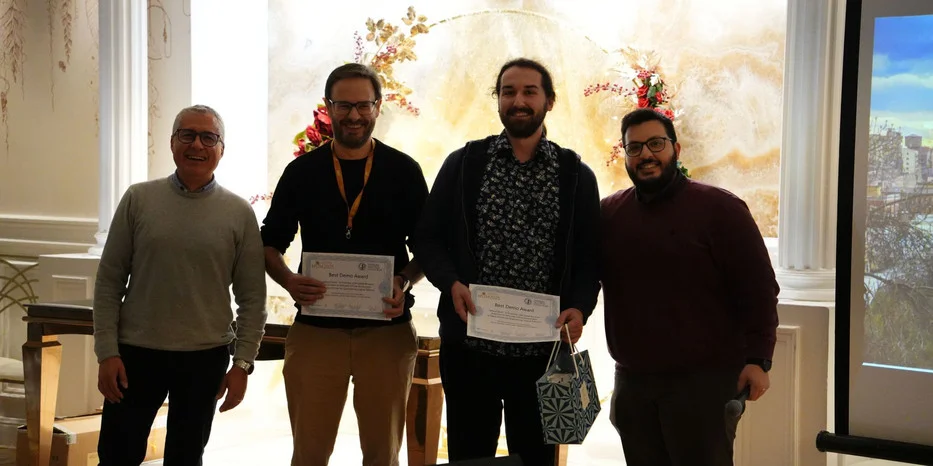
Best Demo Award at MUM ’25 in Enna, Italy!

We are thrilled to share our full paper, “The Proactive Gap: A Scoping Review of Publicly Available LLM-based Browser Extensions and Their Potential to Mitigate Information Disorder” by authors Kirill Kronhardt, Martin Johannes Lehnert, Max Pascher and Jens Gerken. Our scoping review identifies the need for a fundamental shift toward context-aware, proactive interventions for information disorder mitigation. You can find our paper here: https://dl.acm.org/doi/10.1145/3771882.3771896

To address this “proactive gap,” we collaborated with the Social Research Centre of TU Dortmund and the Rhein-Waal University of Applied Sciences for our demo paper, “FallacyCheck – A Proactive LLM-based Browser Extension to Motivate Critical Assessment of News Articles by Questioning Logical Fallacies” by Kirill Kronhardt, Aaron Zilt, Omed Abed, Martin Johannes Lehnert, Max Pascher and Jens Gerken.
FallacyCheck is a working demonstration of our approach, which proactively analyzes news articles, identifies logical fallacies, and uses LLMs to generate a non-leading question. This encourages users to critically assess the information before they’ve consumed the entire article.

Martin J. Lehnert presented the paper along with the demo session and the authors team won ‘Best Demo Award’

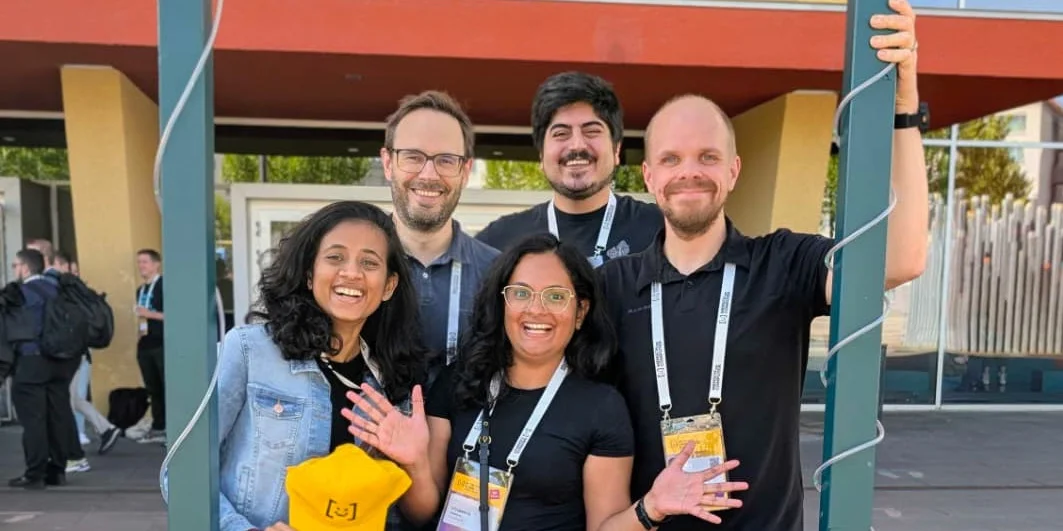
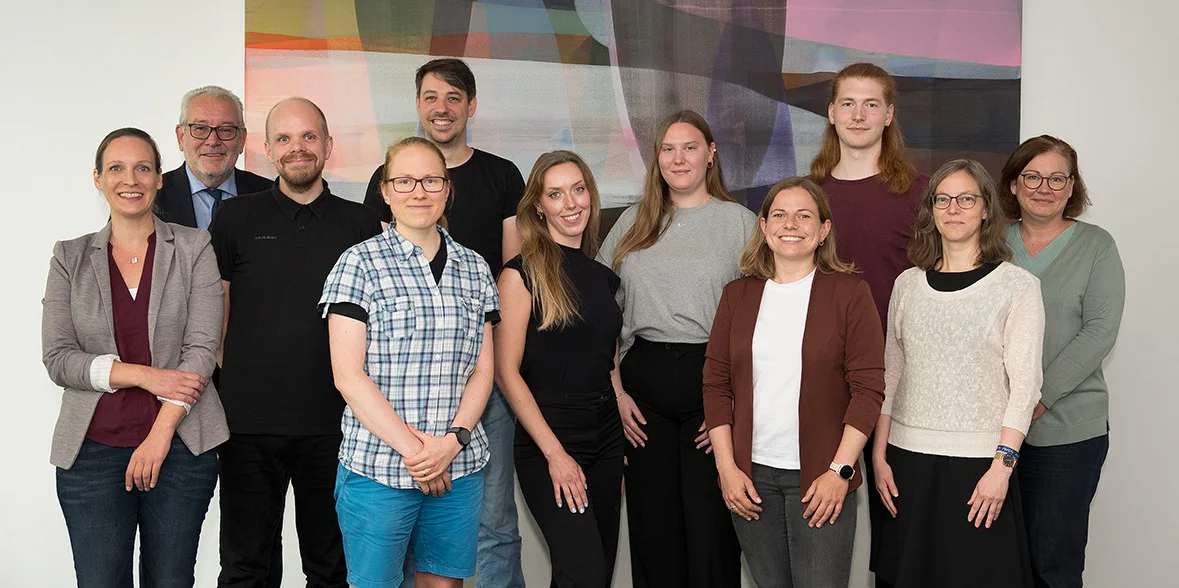
ihri group at Mensch und Computer 2025

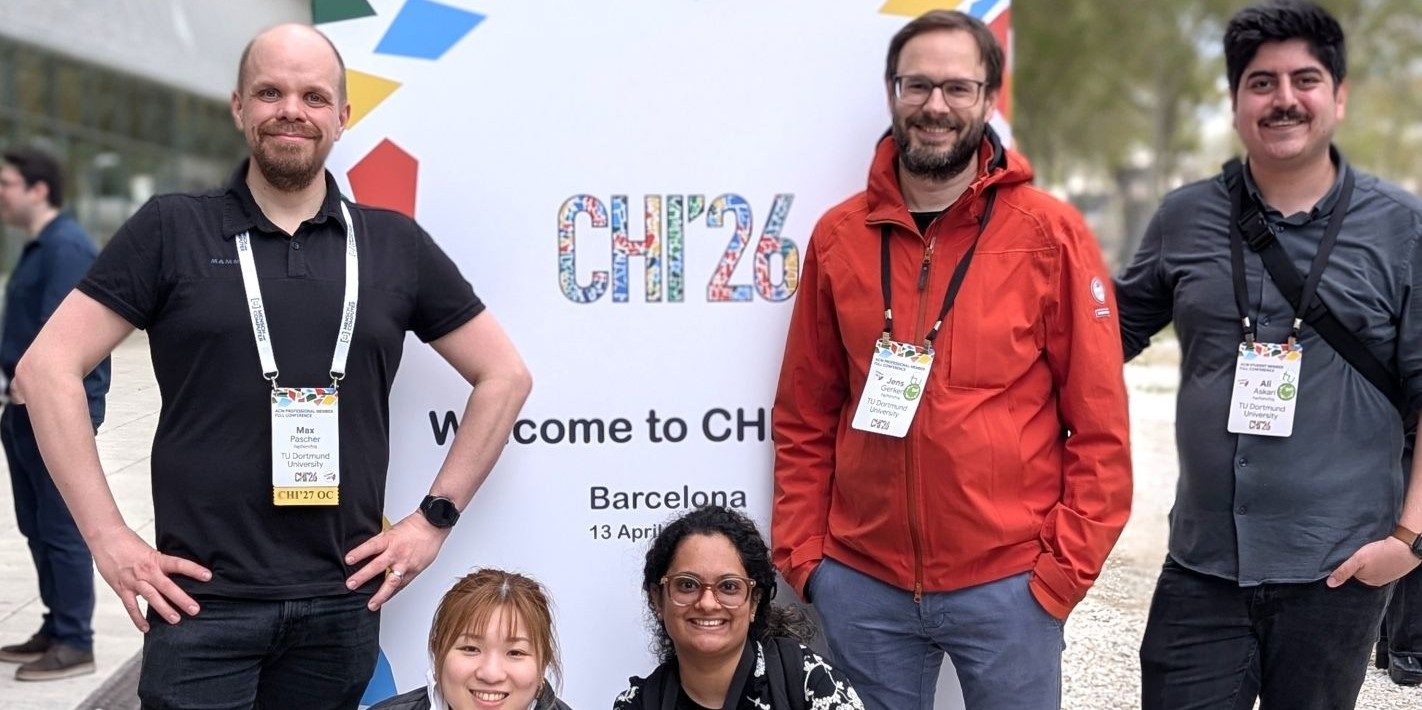
We attended the Mensch und Computer conference 2025 held at TU Chemnitz this year. Coincidentally, it was MuC’s  25th birthday and there were celebrations!
Max Pascher (TU Dortmund) and Jens Gerken (TU Dortmund) along with Giuseppe Sanseverino (TU Chemnitz) and Lewis Chuang (TU Chemnitz) organized the Teleoperation Redefined: Exploring Wearable Interfaces for Natural Interaction (link) workshop in the context of teleoperation in human-robot interaction and accessibility technology.

Young Academy funding

People with severe physical disabilities often require assistance with daily activities. Robotic arms in the form of assistance robots can help them perform tasks such as eating and drinking, thereby promoting their independence and participation in society. However, controlling such systems remains challenging: conventional user interfaces are often not barrier-free, especially when multiple degrees of freedom (DoF) have to be controlled manually.
Shared control approaches such as the Adaptive DoF Mapping Control (ADMC) system, which was developed in Max’ previous research, address this issue by suggesting appropriate movement options for the robotic arm depending on the situation.

The central challenge, however, is communicating these suggestions in a way that is understandable and accessible, particularly for users with impaired visual perception. Currently, many systems rely exclusively on visual feedback. However, this quickly becomes problematic in inclusive contexts. Comparative studies of auditory and vibrotactile alternatives are scarce.
This is precisely where the present project comes in, as it systematically compares the comprehensibility, stress and acceptance of the three feedback modalities (visual, auditory and vibrotactile) in adaptive robot movement suggestions. The project is based on the modular XR framework AdaptiX, which enables the flexible integration and evaluation of these modalities.

https://ihri.reha.tu-dortmund.de/research/projects/multi-modal-shared-control

With the Young Academy, TU Dortmund University supports scientists in the qualification phase to become successful in acquiring external research funding.

New UA Ruhr Committee Strengthens Careers in Science

The University Alliance Ruhr (UA Ruhr) is setting a further example for the support of researchers in early career phases with the establishment of an Early Career Researchers Board (ECR Board for short). The joint committee of Ruhr University Bochum, TU Dortmund University and the University of Duisburg-Essen strengthens the perspective of researchers in early career phases in the structural development of the alliance. Each university has nominated three members from different career stages and disciplines. The constituent meeting took place on 27 June on the Dortmund campus.

Half Day Workshop at CHIWORK in Amsterdam, The Netherlands

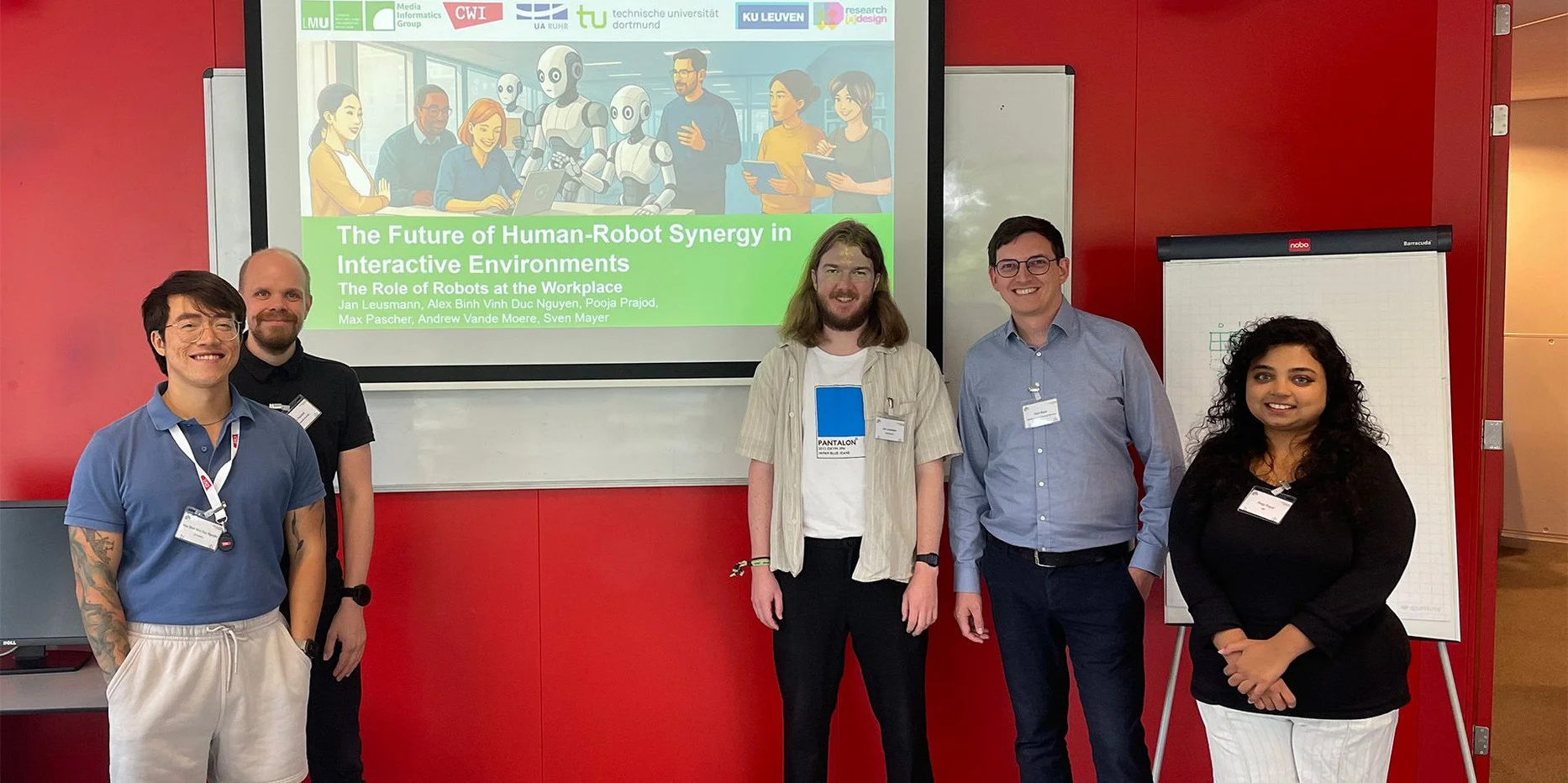
Max Pascher co-organized a workshop along with the others at CHIWORK conference held in Amsterdam, The Netherlands between June 23-25, 2025. The workshop “The Future of Human-Robot Synergy in Interactive Environments: The Role of Robots at the Workplace” (link) was in the context of human-robot collaboration at the workplace and to explore opportunities between human and robots in reference to workplace interactions in designing, implementation and evaluation aspects.

Examining Hybrid Collaboration in Everyday Working Life

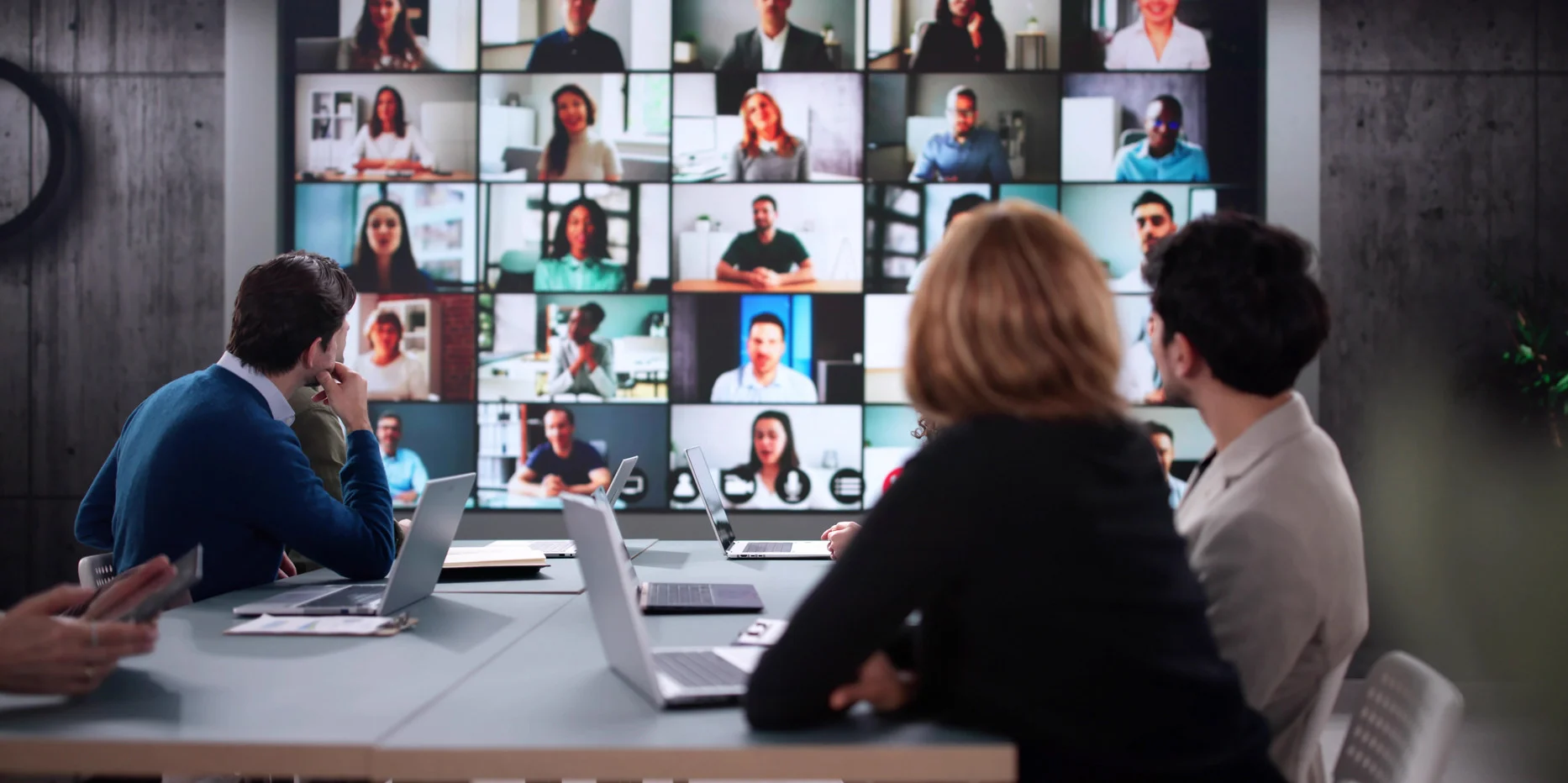
Working from home today, in the office tomorrow and on the train the day after that: For many people, hybrid working has become a matter of course. A new project led by Professor Frauke Mörike and Professor Jens Gerken from the Department of Rehabilitation Sciences explores how hybrid collaboration can be designed in such a way that it is both productive and satisfying for all those involved – regardless of whether the participants are online or on site. The Federal Ministry of Education and Research (BMBF) and the European Social Fund Plus (ESF Plus) of the European Union are funding the collaborative project, called PRAESCO, over three years with around 1.6 million euros, of which about 1 million euros have been allocated to TU Dortmund University.

Scroll to top